Software used in optometry refers to specialized digital systems that support eye care professionals in diagnosis, patient data management, and clinical workflows. These tools improve accuracy, speed, and compliance in optometric practices. How do these software solutions shape modern optometry?
Key Takeaways
- Software used in optometry integrates EMR, imaging, and management tools.
- It enhances accuracy, compliance, and workflow efficiency.
- Common systems include RevolutionEHR, EyeCloudPro, and MaximEyes.
- Cloud-based, connected tools are shaping the future of eye care practices.
What Is the Role of Software Used in Optometry?
Software used in optometry plays a crucial role in managing clinical, diagnostic, and administrative functions. It helps practices enhance patient outcomes while maintaining data accuracy and regulatory compliance.
Key functions include:
- Electronic Medical Records (EMR): Securely store and manage patient data.
- Imaging Integration: Capture, analyze, and store retinal and corneal images.
- Appointment Scheduling: Automate patient bookings and reminders.
- Billing and Insurance: Simplify claim submissions and payment tracking.
- Analytics: Provide insights into patient care and business performance.
What Are the Main Types of Software Used in Optometry?
Optometric practices use several interconnected systems to cover clinical and operational needs:
| Type | Purpose |
| Optometry EMR Software | Record and track clinical data |
| Practice Management Software | Handle scheduling, billing, and workflows |
| Diagnostic Imaging Software | Capture and analyze eye images |
| Patient Communication Tools | Manage reminders and feedback |
| Optical POS Software | Manage sales and inventory in optical stores |
Leading examples include RevolutionEHR, MaximEyes, and EyeCloudPro, which combine EMR, billing, and patient communication in one platfor
How Does EMR Software Support Optometrists?
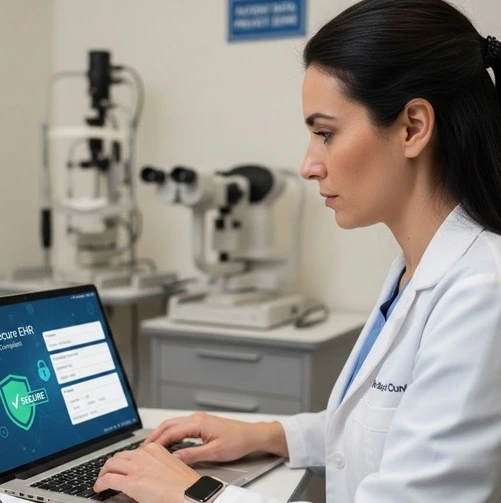
Optometry EMR software centralizes all clinical records and diagnostic data. It allows practitioners to:
- Access complete patient histories during exams.
- Integrate with diagnostic tools for seamless data flow.
- Ensure compliance with healthcare privacy regulations such as HIPAA.
RevolutionEHR pricing models, for example, vary by clinic size and features, while ophthalmology EHR software offers advanced imaging modules suitable for integrated practices.
Which Diagnostic Tools Integrate with Optometry Software?
Modern diagnostic systems connect directly with software platforms to enable precise measurements and real-time image transfers. Commonly integrated tools include:
- Fundus Cameras
- Optical Coherence Tomography (OCT)
- Visual Field Analyzers
- Autorefractors and Keratometers
These integrations reduce manual data entry and improve diagnostic efficiency. Related technologies like optometry practice management software are often discussed alongside imaging systems for comprehensive workflow optimization
How Does Practice Management Software Improve Operations?
Practice management software used in optometry enhances efficiency through automation and data centralization.
- Scheduling: Reduces no-shows with automated reminders.
- Inventory: Tracks optical products and lens orders.
- Billing: Handles insurance claims and receipts.
- Reporting: Offers performance analytics for better decision-making.
Platforms like Ocuco and Adit provide tailored solutions for independent optometrists seeking scalability and integration.
Which Is the Best Software Used in Optometry for Retail Operations?
For optical shops, integrated POS and inventory systems are essential.
Top-rated options include:
- EyeCloudPro – Cloud-based system for retail and clinical management.
- MaximEyes – Combines EMR, billing, and optical sales.
- RevolutionEHR – Suitable for multi-location practices.
Each platform supports seamless transitions from examination to eyewear sales.
What Trends Are Shaping Software Used in Optometry Today?
Emerging technologies are focusing on:
- Cloud-based access for multi-device data synchronization.
- Teleoptometry for remote consultations.
- Integrated imaging AI tools for predictive analysis.
These developments ensure optometrists stay compliant and efficient as digital transformation continues across healthcare.
Conclusion
Software used in optometry has evolved into a comprehensive ecosystem connecting diagnostics, records, and retail operations. Choosing the right optometry software solution enables practices to achieve precision, compliance, and operational efficiency in a rapidly digitalizing healthcare environment
FAQ
What is optometric software?
Optometric software is a digital tool that manages clinical, diagnostic, and administrative functions in eye care practices.
What technology is used in optometry?
Optometry uses EMR systems, diagnostic imaging software, and optical instruments integrated with digital management tools.
Which is the best software for optical shop?
EyeCloudPro, MaximEyes, and RevolutionEHR are leading software for optical retail management.
What is the tool optometrists use?
Optometrists use EMR and diagnostic imaging tools to assess vision and maintain accurate patient records.
Sources
Capterra – Optometry Software
EHnote – Optometry Practice Software
Altris – Optometry Practice Management Software
RevolutionEHR – Best Optometry EMR Software
G2 – Optometry Software
Adit – Optometry Software
MaximEyes – Top Optometry EHR Software Must-Haves
Ocuco – Practice Management Software for Optometrists
EyeCloudPro