Optometry analytics software is a data-driven system that aggregates and analyzes clinical, operational, and financial metrics within eye care practices. It supports optometrists in detecting key data trends, refining patient engagement, and maximizing overall business outcomes. Why is analytics becoming central to optometry operations today?
Key Takeaways
- Optometry analytics software transforms raw data into actionable insights.
- Enhances clinical accuracy and administrative efficiency.
- Supports compliance with HIPAA and GDPR standards.
- Integrates with diagnostic and billing tools.
- Improves profitability through performance monitoring.
What Is Optometry Analytics Software and How Does It Work?
Optometry analytics software collects and processes data from multiple systems such as EHRs, diagnostics, and patient management tools.
Key functions include:
- Consolidating patient records and test data
- Measuring clinical performance metrics
- Tracking billing efficiency and appointment trends
- Generating visual dashboards for decision support
It often integrates with optometry EHR systems and optical POS software to create a unified data ecosystem.
How Does Optometry Analytics Software Improve Clinical Decision-Making?
The software enables optometrists to translate diagnostic data into actionable insights.
Clinical benefits include:
- Early detection of eye diseases through data pattern recognition
- Predictive analytics for glaucoma, macular degeneration, or diabetic retinopathy
- Benchmarking outcomes against industry standards (e.g., AAO guidelines)
- Cross-analysis of patient demographics and outcomes
This approach strengthens evidence-based care and reduces diagnostic variability.
What Are the Key Metrics Tracked by Optometry Analytics Software?
Most platforms track metrics across clinical, operational, and financial domains.
| Category | Examples of Metrics |
| Clinical | Patient visit frequency, diagnostic outcomes, follow-up adherence |
| Operational | Appointment cancellations, workflow bottlenecks, staff productivity |
| Financial | Billing turnaround time, reimbursement rate, revenue per patient |
Such structured analytics support long-term business planning and care optimization.
How Does Optometry Analytics Software Support Regulatory Compliance?
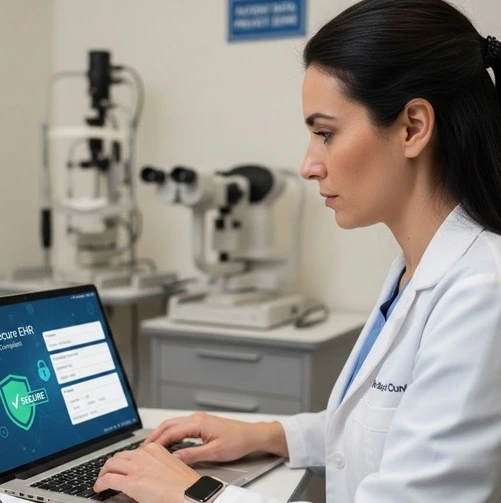
The platform follows all applicable data security protocols and privacy rules to protect sensitive patient data.
Compliance features:
- HIPAA-compliant data encryption and access control
- GDPR adherence for EU-based clinics
- Audit trails for clinical and billing documentation
- Automated reporting for insurance or regulatory audits
Adhering to these standards helps maintain patient trust and operational integrity.
What Are Common Integrations for Optometry Analytics Software?
Effective analytics systems connect with various digital tools to form a complete practice infrastructure:
- A digital tool for optometrists to coordinate schedules and automate billing tasks
- Software enabling optical retailers to monitor inventory levels and process customer purchases efficiently.
- Patient communication systems (e.g., Weave, Adit Optometry) for feedback and engagement
- Diagnostic imaging systems for OCT, refraction, and fundus data
People also search for related terms such as optometry practice management software, best optometry software, and optical EHR systems when researching implementation options.
How Do Practices Benefit Financially from Optometry Analytics Software?
By identifying inefficiencies and revenue opportunities, the software boosts profitability.
Financial advantages:
- Reduced appointment no-shows through data-driven reminders
- Optimized inventory based on historical demand
- Better insurance claim accuracy and faster reimbursements
- Improved patient retention via satisfaction tracking
These metrics directly translate into measurable ROI for clinics.
What Is the Future of Optometry Analytics Software?
The next generation of systems will emphasize interoperability, real-time insights, and adaptive dashboards. Clinics will rely on automated data workflows to enhance precision care and reduce administrative load. Integrating these tools with the best optometry software will create seamless, end-to-end clinical ecosystems that drive both efficiency and patient satisfaction.
Conclusion
Optometry analytics software is reshaping how eye care clinics monitor performance, interpret clinical trends, and manage operations. As the field evolves, integration with diagnostic systems and the best optometry software will define future-ready practices. The ability to translate data into clinical intelligence will remain the key differentiator for successful optometry operations.
FAQ
What is the purpose of optometry analytics software?
It gathers and processes key data to boost clinical quality, administrative productivity, and business profitability.
Is optometry analytics software HIPAA compliant?
Yes, most solutions are fully HIPAA-compliant and include encryption and access control measures.
Can it integrate with EHR and billing systems?
Yes, it seamlessly integrates with EHR, billing, and practice management systems.
Who uses optometry analytics software?
Optometrists, clinic managers, and multi-location practice administrators use it for data-based decisions.
What benefits does it offer small practices?
Designed for smaller setups, it enhances efficiency, reduces administrative errors, and promotes better patient engagement.
Sources
- https://ehnote.com/services/optometry-practice-software
- https://www.altris.ai/article/optometry-practice-management-software/
- https://www.softwaresuggest.com/optometry-software
- https://adit.com/optometry
- https://www.getweave.com/optometry-practice-analytics/
- https://technologycounter.com/optometry-software?srsltid=AfmBOorzREygU-02xEkEsIgkdyUQqfPTDdHessdU8_OAqM55TAMd2N3C
- https://www.iplum.com/blog/best-optometry-ehr-software?srsltid=AfmBOooZAvXsvadzi7Fz6DZCSbhnnyuvnqQa2F1GCmav_Tyv2ttIxg0_
- https://www.eyefinity.com/
- https://www.technavio.com/report/practice-management-software-pms-in-optometry-application-market-industry-analysis